

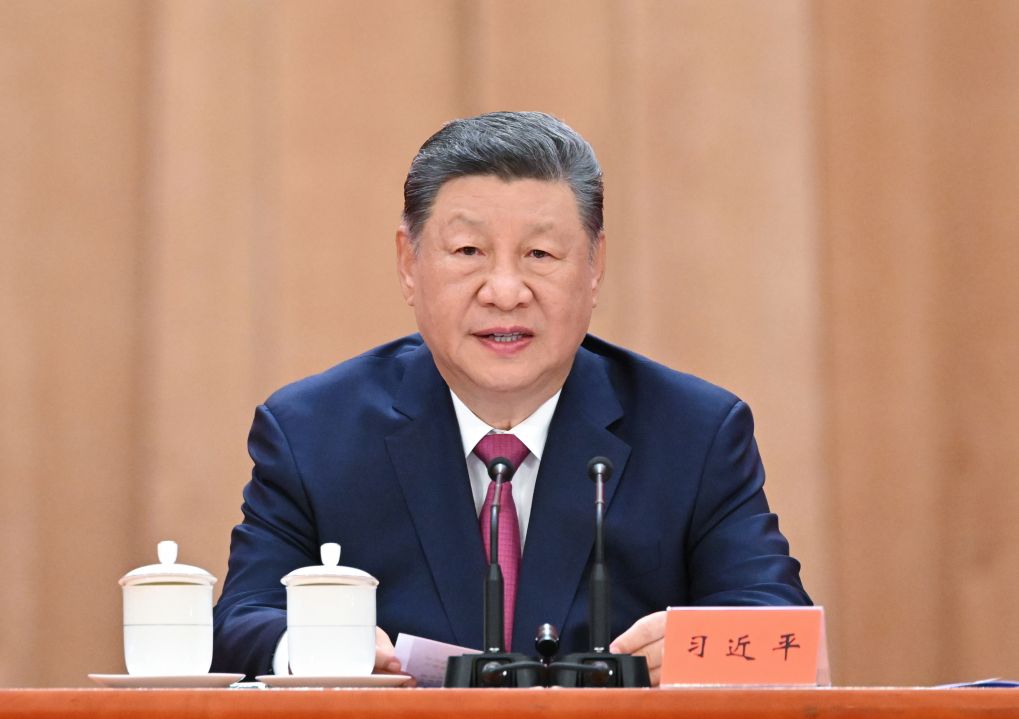
Xi Jinping, general secretary of the Communist Party of China (CPC) Central Committee, chaired a Party leadership meeting Friday to deliberate and make arrangements regarding relief and rescue efforts after a devastating mudslide struck Gyirong County in southwest China’s Xizang Autonomous Region.
At the start of the meeting of the Political Bureau of the CPC Central Committee, Mr. Xi, who is also Chinese president and chairman of the Central Military Commission, and other leaders, including Li Qiang, Zhao Leji, Wang Huning, Cai Qi, Ding Xuexiang and Li Xi, observed a moment of silence in tribute to the victims of the disaster.
On Wednesday, a mudslide in Nepal struck the Gyirong border post, causing numerous casualties and leaving many missing.
Following this disaster, the CPC Central Committee attached paramount importance to the situation, and Mr. Xi immediately issued important instructions regarding emergency relief and response efforts.
At the behest of Mr. Xi, Premier Li Qiang, a member of the Standing Committee of the Political Bureau of the CPC Central Committee, visited the disaster area to meet with those affected and rescue personnel, and to oversee emergency relief and response efforts.
Vice Premier Zhang Guoqing, a member of the Political Bureau of the CPC Central Committee, also visited the site to guide the response operations.
According to the meeting, the emergency relief operations were carried out swiftly, in an orderly and coordinated manner, under the firm leadership of the Party Central Committee. Considerable efforts are underway to resettle those affected and manage the aftermath of the disaster.
The disaster occurred in a plateau region with a harsh climate, characterized by steep valleys, changeable weather, the presence of numerous surrounding glaciers and glacial lakes, as well as potential geological hazards. All these factors significantly complicate emergency rescue operations.
The meeting stressed that all relevant authorities and services must take decisive and effective measures for rescue operations. Search and rescue plans must be developed scientifically, and every effort must be made to locate and rescue all missing Chinese and foreign nationals, according to the meeting.
According to the meeting, it is necessary to strengthen joint consultation between the various services, improve monitoring and early warning systems, closely monitor the stability of the reservoir and surrounding mountains, and take effective measures to rigorously prevent secondary disasters. It also called for enhanced management of field personnel to ensure safety throughout rescue operations.
China will provide emergency aid to the disaster-stricken region of Nepal and will conduct international cooperation on rescue efforts, the meeting said.
The meeting called for comprehensive inspections to identify potential risks and hazards, enhanced real-time monitoring and early warning, and improved capacity to identify risks arising from disaster chains.
She also called for improved emergency response mechanisms and the strengthening of key relief forces.
According to the meeting, more emergency relief and response forces need to be deployed to remote and disaster-prone areas.
International cooperation on disaster management in border regions must also be strengthened, in order to jointly improve emergency management as well as disaster prevention, mitigation and relief, it was learned from the meeting.
Regarding better coordination between development and security, the meeting stressed the need to prepare for the most adverse scenarios and extreme situations, to demonstrate a strong sense of political responsibility and constant vigilance, and to make robust efforts to ensure security and stability. End